Best Power Stations for Home Backup
Home backup means covering your essential loads for days, not hours: the refrigerator, internet, phones, lights, medical devices, and the startup surges that come with them. That takes the 3000Wh+ class — 4000-6000W inverters that shrug off any single appliance, battery expandability, and solar input fast enough to refill meaningfully every daylight hour. Indoors-safe and silent, unlike a gas generator.
Who Should Buy the 3000Wh+ Class?
- Homeowners in outage-prone areas who want multi-day essentials coverage
- Households with medical devices (CPAP, oxygen concentrators) that can't lose power
- Anyone pairing large solar input for indefinite essentials during extended outages
- Buyers replacing a gas generator with an indoor-safe, zero-maintenance alternative
Who Can Spend Less
- A fridge-plus-essentials day is covered by the 1000–2000Wh class at a third of the price
- Building a full solar kit? Start with the solar generator guide for panel pairing
Our Picks
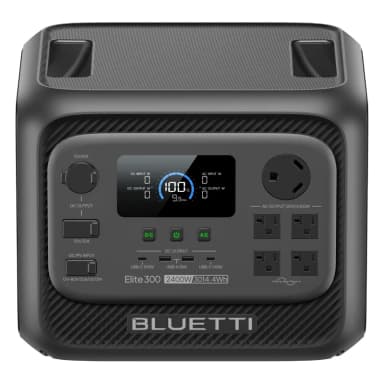
BLUETTI Elite 300
The budget door into the 3kWh class: 3014Wh with a 2400W inverter (4800W Power Lifting for resistive loads) at only 26.3 kg. 1200W solar ceiling, 4 AC outlets plus a TT-30 RV outlet, a 2-hour wall recharge, and 6000-cycle LiFePO4. No 240V output and no battery expansion, so pick it for essentials backup, not well pumps.
3014 Wh
2400W
4800W
1200W
2h
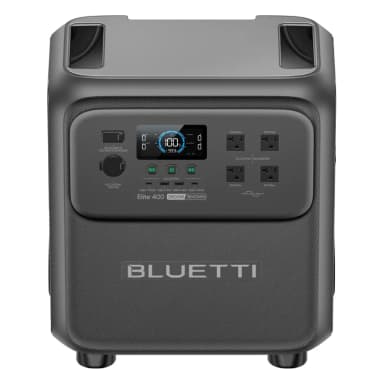
BLUETTI Elite 400
3840Wh, the same battery as the Anker F3800, at a much lower price, on built-in wheels. A 2600W inverter with 5200W surge, 4 AC outlets, 1000W solar input, and a 1.9-hour wall recharge. No 240V output and no expansion: it is a big 120V essentials battery rather than a whole-home system.
3840 Wh
2600W
5200W
1000W
1.9h
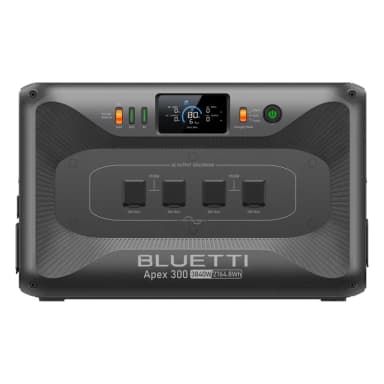
BLUETTI Apex 300
The expandable one. A 2765Wh base with a 3840W inverter (7680W surge) that grows to 19.4kWh with B300K battery packs, plus a NEMA 14-50 outlet switchable to 240V for a well pump or dryer. 2400W of solar input and a 65-minute turbo recharge. Start here if you want to build toward whole-home backup over time.
2765 Wh
3840W
7680W
2400W
1.1h
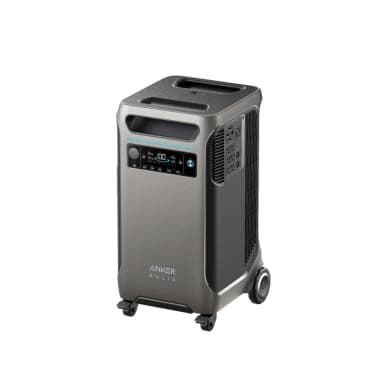
Anker SOLIX F3800
3840Wh with a 6000W inverter (9000W surge) and a 240V output — the pick when a well pump or other 240V load is on the must-run list. 2400W solar ceiling, 8 AC outlets, expandable with additional batteries, and routinely discounted far below MSRP with a brand-direct option.
3840 Wh
6000W
9000W
2400W
2h
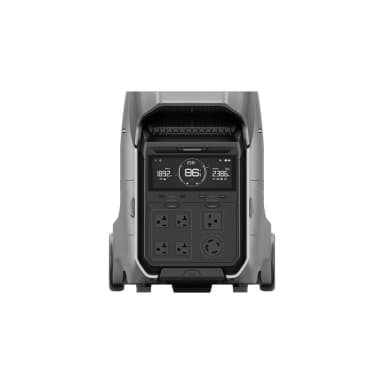
EcoFlow DELTA Pro 3
4096Wh — the biggest single-unit battery here — with a 4000W inverter (8000W surge), a 2600W solar ceiling, and a 1.1-hour wall recharge that's remarkable for this size. Expandable with extra batteries; the strongest all-round essentials-backup platform.
4096 Wh
4000W
8000W
2600W
1.1h
Frequently Asked Questions
What size power station do I need for home backup?
Size to your essential loads, not the whole panel. A full-size fridge, internet, phones, lights, and a CPAP run roughly 2-3kWh per day — a 3000-4000Wh station covers a day-plus outright and multiple days when paired with solar panels. Whole-home backup including HVAC and cooking is a different project (10kWh+ with an installed transfer switch).
Do I need a transfer switch for home backup?
Not for plug-in use — you can run fridges, electronics, and lamps straight from the station's outlets with extension cords. You do need an electrician-installed transfer switch or interlock to power hardwired circuits (furnace blower, well pump, ceiling lights) safely. Never backfeed a wall outlet.
Can a power station run 240V appliances?
Only specific models. The Anker SOLIX F3800 provides a 240V output for appliances like well pumps or dryers (and can pair for more capacity), and the BLUETTI Apex 300 has a 240V outlet selectable with a switch. Most stations — including excellent 120V-only units — cannot. If a 240V load is on your must-run list, that requirement picks your station before any other spec does.
Plan the details