Best Solar Generators for Home Backup
A “solar generator” is just a large battery power station paired with solar panels — no engine, no fuel, no fumes. It runs silently and is safe indoors (unlike a gas generator, which can produce deadly carbon monoxide), and the panels recharge it for free from the sun. Below are the best 2000Wh+ stations for home backup, plus the panels to refill them.
Who Should Buy a Solar Generator?
- Anyone who wants quiet, fume-free backup that’s safe to run indoors or in an apartment
- Homeowners wanting multi-day outage backup for a fridge, lights, Wi-Fi, and CPAP
- RV, van-life, and off-grid users who recharge from the sun instead of hauling fuel
- People who need 240V loads (well pump, dryer) covered — the largest units do split-phase
Our Picks
Largest capacity first. Pair any of these with the solar panels below to complete the “solar generator.”
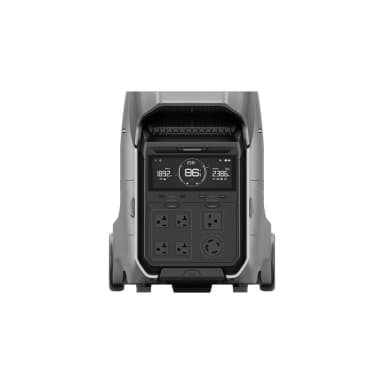
EcoFlow DELTA Pro 3
The flagship home-backup solar generator. 4096Wh expandable to 48kWh, 4000W output with native 120/240V split-phase, and a huge 2600W of solar input that refills it in hours. The pick if you want true multi-day, whole-home essential backup.
4096 Wh
4000W
8000W
2600W
51.5 kg
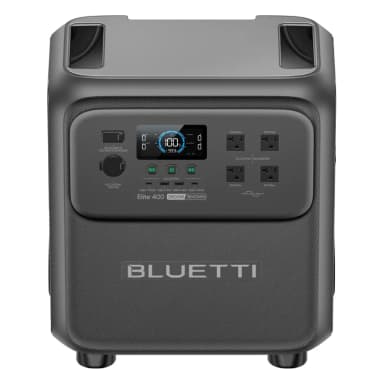
BLUETTI Elite 400
3840Wh on wheels with a 2600W inverter (5200W surge) and 1000W of solar input, for a lot less than the Anker F3800 with the same capacity. It runs 120V only and is not expandable, so it suits a big essentials setup rather than a whole-home system.
3840 Wh
2600W
5200W
1000W
39 kg
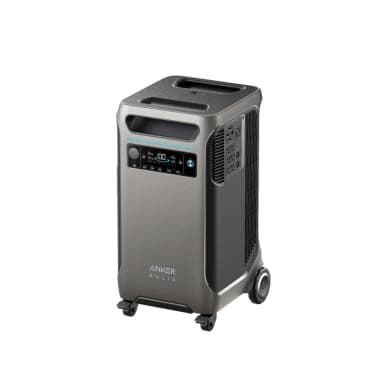
Anker SOLIX F3800
Built for serious home backup: 3840Wh, a massive 6000W output with native 120/240V, expandable to ~26.9kWh, and it can AC-couple with existing home solar. The choice when you need to run 240V loads like a well pump or dryer.
3840 Wh
6000W
9000W
2400W
60 kg
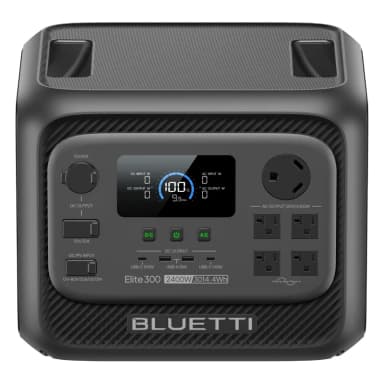
BLUETTI Elite 300
The cheapest 3kWh-class solar generator here and the lightest at 26.3 kg: 3014Wh, 2400W (Power Lifting to 4800W), 1200W of solar input that refills it in about four hours, a TT-30 RV outlet, and 6000-cycle LiFePO4. Not expandable — buy the capacity you need up front.
3014 Wh
2400W
4800W
1200W
26.3 kg
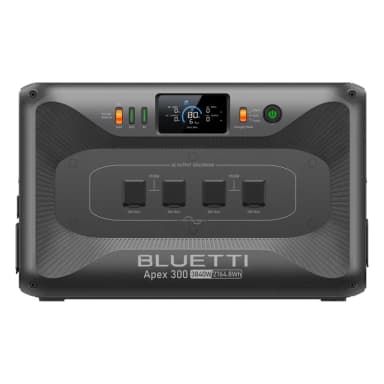
BLUETTI Apex 300
The solar generator you can grow: a 2765Wh base with a 3840W inverter, 2400W of solar input across two ports (more with BLUETTI's high-voltage SolarX add-on), expansion to 19.4kWh with B300K packs, and a switchable 240V NEMA 14-50 outlet.
2765 Wh
3840W
7680W
2400W
38 kg
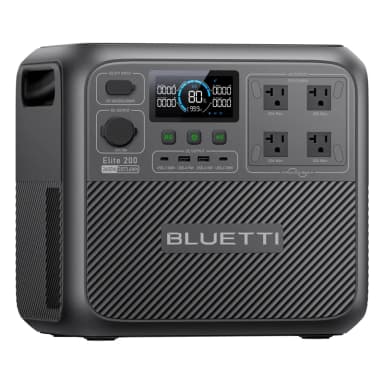
BLUETTI Elite 200 V2
BLUETTI's current 2kWh unit: 2074Wh with a strong 2600W inverter (3900W Power Lifting), 1000W solar input, a 1.4-hour wall recharge, and 6000-cycle LiFePO4 rated for a decade of daily use. Not expandable, so it suits essentials backup rather than growing whole-home setups.
2074 Wh
2600W
3900W
1000W
24.2 kg
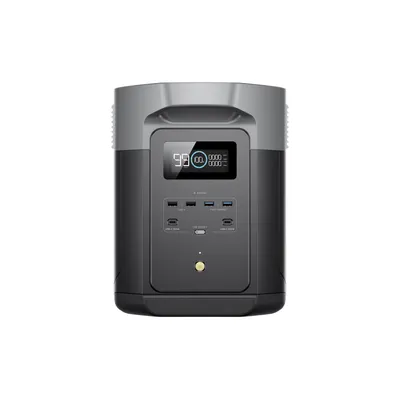
EcoFlow DELTA 2 Max
2048Wh with a fast 1000W solar input and EcoFlow's polished app ecosystem. A solid mid-size solar generator for RVs and home essentials, though BLUETTI's Elite 200 V2 matches its capacity for less.
2048 Wh
2400W
4800W
1000W
23 kg
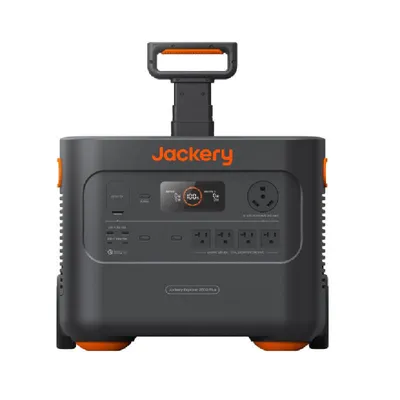
Jackery Explorer 2000 Plus
2042Wh and expandable all the way to 12kWh, with a high 1400W solar input and Jackery's 5-year warranty. Great if you want to start at 2kWh and stack capacity as your needs grow.
2042 Wh
3000W
6000W
1400W
27.9 kg
Add Solar Panels
The power stations above are the battery half of a solar generator. To recharge from the sun, pair one with foldable solar panels — add as many as the station’s solar input allows for faster recharge.
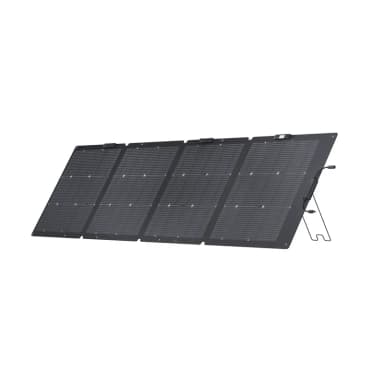
EcoFlow 220W Bifacial (NextGen)
A 220W foldable bifacial panel (25% N-type cells) that captures light on both sides. Weighs just 7 kg, folds flat, and is IP68-rated for all-weather use. Uses universal MC4connectors, so it pairs with most EcoFlow and third-party stations. Chain several together to hit a large station’s full solar input.
220W
21.5V
25%
7 kg
IP68
Tip: keep total panel open-circuit voltage (Voc) within your station’s rated solar input range, and match the connector (most use MC4 with an adapter to the station’s port).
Frequently Asked Questions
What is a solar generator?
A solar generator isn't a single gadget — it's a large rechargeable power station (a battery with a built-in inverter and outlets) paired with portable solar panels. The power station stores the energy and runs your devices; the panels recharge it from sunlight. Unlike a gas generator, there's no engine, fuel, or exhaust, so it runs silently and is safe to use indoors.
Can you run a solar generator indoors?
Yes — that's one of its biggest advantages over a gas generator. A solar generator (battery power station) produces no carbon monoxide or exhaust, so it's safe to run inside a home, apartment, or RV. Gas and propane generators must never run indoors or in an attached garage because of the deadly CO risk. The solar panels stay outside in the sun; the power station itself runs wherever you need it.
What size solar generator do I need for home backup?
For essentials during an outage — a refrigerator, lights, phones, Wi-Fi, and CPAP — a 2000Wh unit covers most of a day and recharges with solar. For multi-day backup or to run 240V loads like a well pump or to power much of a home, step up to a 3000-4000Wh+ expandable unit like the EcoFlow DELTA Pro 3 or Anker SOLIX F3800. Use our runtime and fridge-backup calculators to size it to your actual loads.
How many solar panels does a solar generator need?
It depends on the station's maximum solar input and how fast you want to recharge. A mid-size 2000Wh unit accepts roughly 1000-1400W of panels; large units like the DELTA Pro 3 (2600W) and F3800 (2400W) accept far more. As a rule of thumb, more panel watts means faster recharge — a 4000Wh station paired with 2000W+ of panels can refill in a single sunny day. Always keep total panel voltage (Voc) within the station's rated solar input range.
Is a solar generator better than a gas generator?
Each has trade-offs. A solar generator is silent, fume-free, indoor-safe, and needs no fuel — ideal for apartments, RVs, CPAP users, and anyone who wants quiet, maintenance-free backup. A gas generator delivers unlimited runtime as long as you have fuel, which matters for very long outages or heavy continuous loads. Many people use a solar generator for daily essentials and quiet indoor use, and keep a gas generator only for prolonged grid-down events.
Size it to your actual loads