EcoFlow vs Jackery (2026): Which Portable Power Station Brand Is Better?
Spec-backed EcoFlow vs Jackery comparison: pricing, charging speed, cycle life, warranty, and the right pick for camping, apartment backup, and home use. Both run LiFePO4 in 2026.
Quick answer
It depends on the size you need. EcoFlow wins the small and mid-size tiers on output per dollar and puts an app on every model. Jackery's refreshed 2026 lineup wins the big tiers: the Explorer 1000 v2 is the cheapest 1kWh-class unit here, and the Explorer 2000 Plus undercuts the DELTA 2 Max while offering more power and far more expansion. Both ship LiFePO4 on every current model.
EcoFlow and Jackery are the two best-known portable power station brands in North America. They compete head-to-head at every capacity tier from ~250 Wh up to ~2 kWh and beyond. This comparison uses each brand's currently shipping lineup as of 2026, including Jackery's new v2 models, which replaced the Explorer 300 Plus and 600 Plus. Both brands are fully on LiFePO4, so older reviews comparing first-generation NMC units do not reflect today's products.
Quick Winner by Scenario
The RIVER 3 Plus (286Wh) runs a 600W inverter with three AC outlets and expands to 858Wh. Jackery's Explorer 300 v2 (288Wh) has a 300W inverter and two outlets, though it is lighter at 3.7 kg.
The RIVER 2 Pro gives you 768Wh and an 800W inverter for less than the Explorer 600 v2, which has 640Wh and a 500W inverter.
The Explorer 1000 v2 (1070Wh, 1500W) costs noticeably less than the DELTA 3 Plus (1024Wh, 1800W). The DELTA 3 Plus has the stronger inverter; Jackery's HomePower 1000 Plus v2 matches it at 1800W.
The Explorer 2000 Plus (2042Wh, 3000W) costs less than the DELTA 2 Max (2048Wh, 2400W) and expands to 12kWh, or 24kWh in a parallel pair. The DELTA 2 Max tops out around 6kWh.
At 1kWh they are neck and neck: Jackery's HomePower 1000 Plus v2 recharges in about 50 minutes and EcoFlow's DELTA 3 Plus in about 56. Across the small and mid tiers EcoFlow is quicker.
Every EcoFlow model has app control. Jackery's Explorer 300 v2 and 600 v2 dropped the app; it returns on the 1000 v2 and up.
Side-by-Side Specs
| EcoFlow | Jackery | |
|---|---|---|
| Small tier | RIVER 3 Plus — 286Wh, 600W, $299 | Explorer 300 v2 — 288Wh, 300W, $279 (was $299) |
| Mid tier | RIVER 2 Pro — 768Wh, 800W, $369 | Explorer 600 v2 — 640Wh, 500W, $535 |
| 1kWh tier | DELTA 3 Plus — 1024Wh, 1800W, $654 (was $799) | Explorer 1000 v2 — 1070Wh, 1500W, $499 (was $559) |
| 2kWh tier | DELTA 2 Max — 2048Wh, 2400W, $1029 | Explorer 2000 Plus — 2042Wh, 3000W, $899 (was $1199) |
| Chemistry | LiFePO4, 3,000-4,000 cycles to 80% | LiFePO4, 4,000-6,000 cycles to 70% |
| App support | Yes on all models | Yes on 1000 v2 and up; not on the 300 v2 or 600 v2 |
| Max expansion | DELTA 3 Plus ~5kWh, DELTA 2 Max ~6kWh | HomePower 1000 Plus v2 ~11kWh, 2000 Plus 12-24kWh |
Verdict
Buy by size. Under 1kWh, EcoFlow is the better value: the RIVER 3 Plus and RIVER 2 Pro give you more inverter and more capacity per dollar than Jackery's lighter, app-free 300 v2 and 600 v2. From 1kWh up, Jackery's current lineup takes over: the Explorer 1000 v2 is the cheapest 1kWh-class unit here, the HomePower 1000 Plus v2 matches the DELTA 3 Plus and expands far further, and the Explorer 2000 Plus beats the DELTA 2 Max on price, power and expansion. EcoFlow keeps the edge on app features across its range.
Frequently Asked Questions
Which is better, EcoFlow or Jackery?
It depends on the size. For small and mid-size stations, EcoFlow usually gives you more inverter watts and capacity per dollar and has an app on every model. From about 1kWh up, Jackery's 2026 lineup is the better value: the Explorer 1000 v2 undercuts the DELTA 3 Plus, and the Explorer 2000 Plus costs less than the DELTA 2 Max while offering a stronger inverter and much more expansion.
Is Jackery better than EcoFlow for camping?
For pure portability, yes. The Explorer 300 v2 is 288Wh at 3.7 kg with simple button controls and no app to manage. EcoFlow's RIVER 3 Plus is a little heavier but has a 600W inverter, a third AC outlet and optional expansion, so it handles bigger camp loads. Pick Jackery for the lightest simple unit, EcoFlow if you need more output at camp.
Are EcoFlow and Jackery the same battery chemistry?
Yes, on all current 2026 models. Both brands have moved their entire shipping lineups to LiFePO4 (lithium iron phosphate). LiFePO4 lasts thousands of cycles and is far more thermally stable than the older NMC chemistry earlier generations used. Note the rating thresholds differ: Jackery quotes cycles to 70% capacity, EcoFlow to 80%.
Does EcoFlow really charge faster than Jackery?
In the small and mid tiers, yes. At 1kWh it is now a tie: Jackery's HomePower 1000 Plus v2 recharges from a wall outlet in about 50 minutes and EcoFlow's DELTA 3 Plus in about 56. Jackery's Explorer 1000 v2 reaches full in about an hour in its emergency charging mode.
Which has the better warranty, EcoFlow or Jackery?
EcoFlow gives 5 years on most current LiFePO4 models. Jackery gives 3 years, extended to 5 when you buy from jackery.com. Jackery rates more cycles (4,000-6,000) but to a lower 70% capacity threshold than EcoFlow's 80%, so the cycle numbers aren't directly comparable.
Should I buy EcoFlow or Jackery for home backup?
At the 2kWh tier, Jackery currently has the edge: the Explorer 2000 Plus (2042Wh, 3000W) costs less than the EcoFlow DELTA 2 Max (2048Wh, 2400W) and expands to 12kWh, or 24kWh in a parallel pair, versus about 6kWh for the DELTA 2 Max. For whole-home backup beyond that, compare the EcoFlow DELTA Pro 3 with Jackery's larger systems on 240V support and total capacity.
Are EcoFlow and Jackery batteries safe? Have either had recalls?
Both brands' current LiFePO4 lineups have a strong safety track record. LiFePO4 chemistry itself is dramatically more thermally stable than the older NMC chemistry - peak failure temperatures around 350°C versus ~1,000°C for NMC. Always check the CPSC recall database for the specific model you're considering before purchase, but neither brand has the kind of widespread safety issues that have hit some lower-tier battery products.
Recommended Power Stations
These meet the wattage and surge requirements for this device. Ranked by value within each tier.
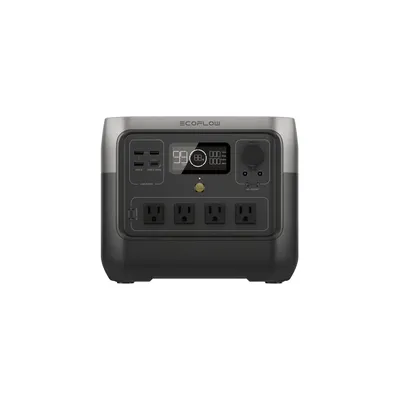
EcoFlow RIVER 2 Pro
768 Wh
800W
1600W
7.8 kg
220W
1.2h
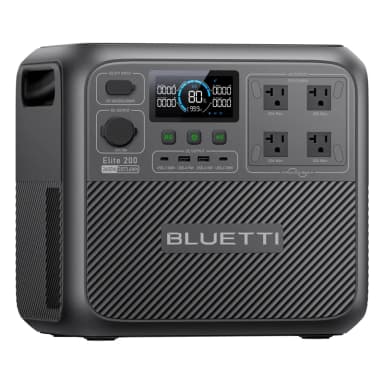
BLUETTI Elite 200 V2
2074 Wh
2600W
3900W
24.2 kg
1000W
1.4h
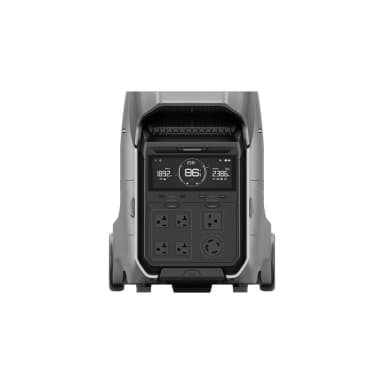
EcoFlow DELTA Pro 3
4096 Wh
4000W
8000W
51.5 kg
2600W
1.1h
Sources
- EcoFlow DELTA 3 Plus product specifications — EcoFlow (manufacturer)
- Jackery Explorer 1000 v2 product specifications — Jackery (manufacturer)
- Jackery Explorer 2000 Plus product specifications — Jackery (manufacturer)
- EcoFlow RIVER 2 Pro product specifications — EcoFlow (manufacturer)
- CPSC Recalls Database — US Consumer Product Safety Commission