EcoFlow vs BLUETTI (2026): Charging Speed vs Value?
Spec-backed EcoFlow vs BLUETTI comparison — price, charging speed, expandability, and the right pick at each capacity tier. Both run LiFePO4.
Quick answer
At matched capacities these two trade blows: EcoFlow charges faster, expands further and has the slicker app; BLUETTI usually costs less for the same capacity and output. Head-to-head, the BLUETTI Elite 100 V2 matches the DELTA 3 Plus on capacity and output for less, and the Elite 200 V2 out-muscles the DELTA 2 Max's inverter at a lower price. Pick EcoFlow for charge speed and expansion; BLUETTI for value.
EcoFlow and BLUETTI are two of the biggest names in portable power, both fully on LiFePO4 in 2026. EcoFlow leads on charging speed, expansion and lineup breadth; BLUETTI competes hard on price-to-capacity with its current Elite series. This compares their currently shipping units at the tiers where they go head-to-head.
Quick Winner by Scenario
The Elite 30 V2 (288Wh, 600W) matches the RIVER 3 Plus on capacity and output, adds 140W USB-C, and usually costs less. The RIVER 3 Plus answers with three AC outlets and expansion to 858Wh.
The DELTA 3 Plus reaches 100% in about 56 minutes; the Elite 100 V2 takes about 70.
The Elite 100 V2 matches the DELTA 3 Plus spec for spec (1024Wh, 1800W, 3600W surge) at a lower price and 1 kg lighter.
The Elite 200 V2 (2074Wh, 2600W) costs less than the DELTA 2 Max (2048Wh, 2400W) and carries a 6,000-cycle rating.
The DELTA 3 Plus expands to about 5kWh and the DELTA 2 Max to about 6kWh. BLUETTI's Elite 100 V2 and 200 V2 are fixed-capacity; its expandable pick is the Apex 300.
EcoFlow's app and accessory ecosystem are more mature and feature-rich.
Side-by-Side Specs
| EcoFlow | BLUETTI | |
|---|---|---|
| Small tier (~288Wh) | RIVER 3 Plus — 286Wh, 600W, $299 | Elite 30 V2 — 288Wh, 600W, $249.99 (was $279.99) |
| 1kWh tier | DELTA 3 Plus — 1024Wh, 1800W, $654 (was $799) | Elite 100 V2 — 1024Wh, 1800W, $489 (was $499) |
| 2kWh tier | DELTA 2 Max — 2048Wh, 2400W, $1029 | Elite 200 V2 — 2074Wh, 2600W, $899 |
| Chemistry | LiFePO4 across the lineup | LiFePO4, 3,000-6,000+ cycles to 80% |
| Charging (1kWh tier) | DELTA 3 Plus ~56 min full | Elite 100 V2 ~70 min full (80% in 45 min) |
| Surge handling | X-Boost (voltage shaping for higher-watt loads) | True surge on Elite 100 V2; Power Lifting (resistive loads only) on others |
| Expansion (1-2kWh tiers) | DELTA 3 Plus to ~5kWh, DELTA 2 Max to ~6kWh | Not expandable (Apex 300 expands to 19.4kWh) |
| App support | Yes on all models | Yes (Bluetooth + Wi-Fi) |
Verdict
It's a genuine value-vs-speed trade-off. BLUETTI is the pick when price matters most: its Elite 100 V2 matches the DELTA 3 Plus for less, and the Elite 200 V2 beats the DELTA 2 Max's inverter while costing less. EcoFlow answers with faster charging, expansion at the 1-2kWh tiers, a broader lineup and a more polished app. One caveat on BLUETTI's Power Lifting: it only boosts resistive loads (heaters, kettles) and won't help start a motor or compressor, though the Elite 100 V2 has a true 3600W surge rating. For budget-focused backup, BLUETTI; for charge speed, expansion and ecosystem, EcoFlow.
Frequently Asked Questions
Which is better, EcoFlow or BLUETTI?
It's a value-versus-speed trade-off. BLUETTI generally wins on price for the same capacity and output: the Elite 100 V2 matches the DELTA 3 Plus for less, and the Elite 200 V2 has a stronger inverter than the DELTA 2 Max at a lower price. EcoFlow wins on charging speed, expandability, lineup breadth and app polish. For budget-focused backup, BLUETTI; for the fastest charging and room to expand, EcoFlow.
Is BLUETTI cheaper than EcoFlow?
Usually, at matched capacity. BLUETTI's Elite series undercuts EcoFlow at the 288Wh, 1kWh and 2kWh tiers while matching or beating the output. EcoFlow closes the gap with frequent sales, so check current prices, but BLUETTI is generally the value leader tier for tier.
EcoFlow DELTA 2 Max or BLUETTI Elite 200 V2?
Both are 2kWh-class LiFePO4 units for home backup. The BLUETTI Elite 200 V2 (2074Wh, 2600W) usually costs less, has the stronger inverter, recharges in about 1.4 hours and is rated 6,000 cycles to 80%, but it cannot be expanded. The EcoFlow DELTA 2 Max (2048Wh, 2400W) expands to about 6kWh with extra batteries and plugs into EcoFlow's broader ecosystem. Pick the Elite 200 V2 for value and output; the DELTA 2 Max if you want to add capacity later.
Does EcoFlow charge faster than BLUETTI?
For a full charge, generally yes. EcoFlow's DELTA 3 Plus reaches 100% in about 56 minutes, while BLUETTI's Elite 100 V2 takes about 70. BLUETTI is competitive on partial charges, reaching 80% in about 45 minutes on its turbo mode.
Are EcoFlow and BLUETTI both LiFePO4?
Yes — both brands ship LiFePO4 (lithium iron phosphate) across their current lineups. LiFePO4 lasts thousands of cycles and is far more thermally stable than the older NMC chemistry, which is why both brands (and their competitors) standardized on it. Older reviews citing NMC describe discontinued models.
What is BLUETTI Power Lifting?
Power Lifting lets a BLUETTI station run resistive appliances rated above its inverter's continuous watts by lowering the voltage — for example, running a 1,500W kettle on the 600W Elite 30 V2. The important limitation: it works only with purely resistive loads like heaters, kettles, and some hot plates. It cannot start motors or compressors (fridges, pumps, power tools), so don't rely on it for surge-heavy devices.
Recommended Power Stations
These meet the wattage and surge requirements for this device. Ranked by value within each tier.
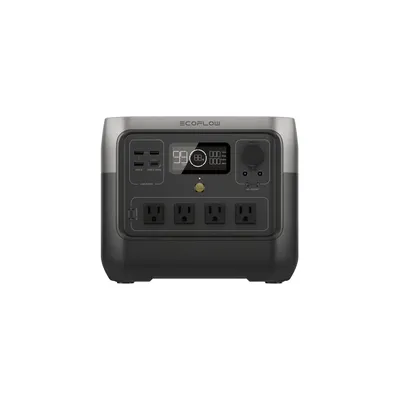
EcoFlow RIVER 2 Pro
768 Wh
800W
1600W
7.8 kg
220W
1.2h
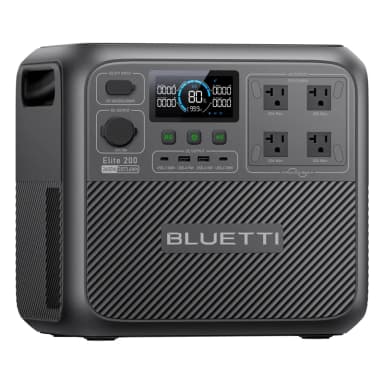
BLUETTI Elite 200 V2
2074 Wh
2600W
3900W
24.2 kg
1000W
1.4h
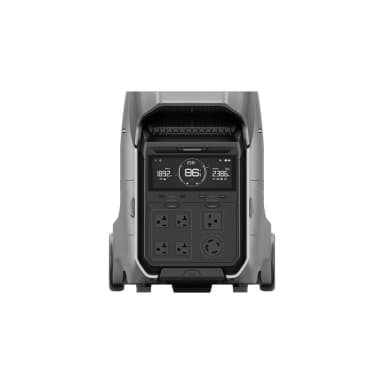
EcoFlow DELTA Pro 3
4096 Wh
4000W
8000W
51.5 kg
2600W
1.1h
Sources
- EcoFlow DELTA 2 Max specifications — EcoFlow (manufacturer)
- EcoFlow DELTA 3 Plus specifications — EcoFlow (manufacturer)
- BLUETTI Elite 200 V2 specifications — BLUETTI (manufacturer)
- BLUETTI Elite 100 V2 specifications — BLUETTI (manufacturer)
- CPSC Recalls Database — US Consumer Product Safety Commission